
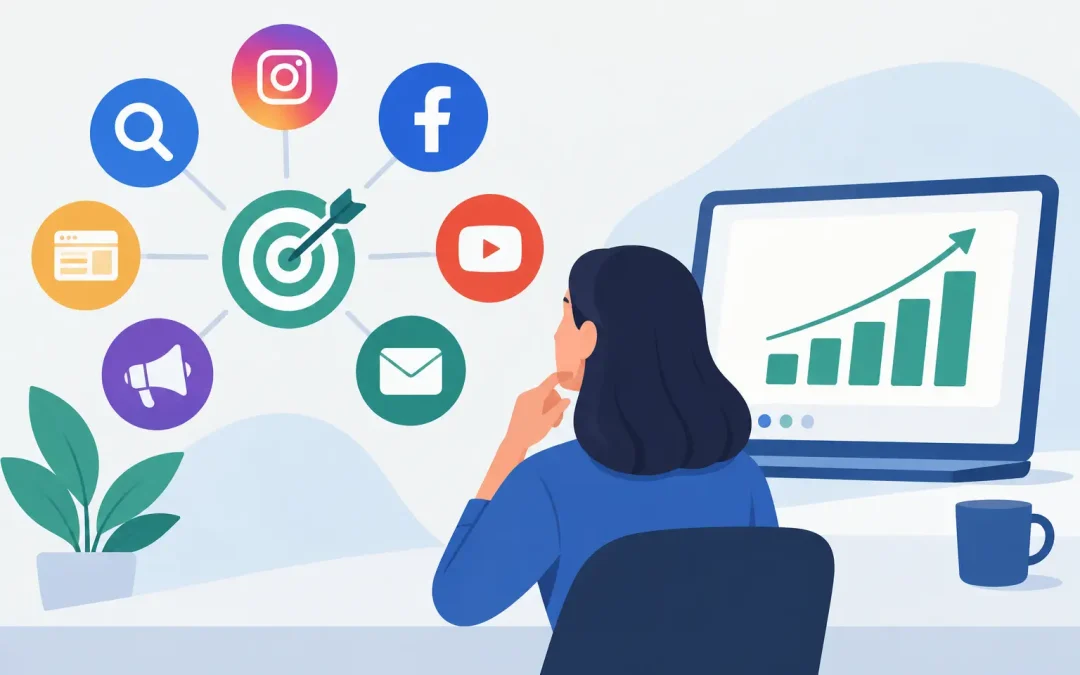
A restaurant can fill tables with a well-timed local offer, while a home-services company may need to be visible the moment a homeowner searches for help. Both need advertising channels, but they should not spend the same way. The right media plan starts with how customers make decisions, what action the business needs and what can be measured after the campaign runs.
For many local and regional businesses, the challenge is not a lack of options. There are many options, each promising reach, leads or sales. Search advertising, social media, streaming video, digital or traditional radio, connected television (OTT), traditional and perhaps broadcast television? They can all play a useful role.
The question is whether each one has a clear job in the larger plan.
Advertising Channels Should Follow Customer Behavior
An advertising channel is simply the path a message takes to reach a potential customer. Its value is determined by fit, not popularity. A channel that works exceptionally well for a dealership may produce weak results for a professional services firm. A campaign built for immediate phone calls requires a different approach than one designed to build recognition over six months.
Start by considering where and when your audience is most receptive. A homeowner looking for emergency plumbing service is likely to use a search engine and make a call quickly. Someone considering a kitchen remodel may see a social media video, visit a website, read reviews and return later through a remarketing ad. A local retailer introducing a seasonal promotion may benefit from a combination of targeted digital ads, targeted videos and even email marketing near the store.
This is why a single-channel strategy is often fragile. It can produce short-term activity, but it may leave gaps in awareness, trust, or follow-up. On the other hand, using every available platform spreads a budget too thin. Effective planning identifies the few channels that can work together to move customers from attention to action.
Start With the Business Outcome, Not the Platform
Before selecting media, define the outcome in terms the business can recognize. “More social media engagement” is not usually the end goal. Increased qualified calls, scheduled appointments, store visits, quote requests, online orders or repeat purchases are more meaningful measures.
The objective also determines the appropriate timeframe. Search ads can often generate immediate demand when the offer, landing page, and targeting are strong. Brand awareness through streaming video, radio, or social media may take longer to influence a purchase, yet it can improve response rates across other channels. A customer is more likely to click a search ad or open an offer from a business they already recognize.
Budget should be part of this discussion from the beginning. A modest budget does not require a modest strategy. It requires priorities. It may be wiser to own a smaller geographic area, focus on a few high-value services, or run fewer campaigns with enough frequency to be noticed. Disciplined budget management means putting dollars behind the messages and audiences most likely to support the goal.
Match the Channel to the Customer Journey
Most customers do not move from first impression to purchase in one step. They may first become aware of a business through a digital or social campaign or streaming commercials. Later, they search the business name, visit the website, compare options, and decide whether to call.
A practical media plan accounts for these stages. Awareness channels create familiarity. Consideration channels provide proof, details and a reason to choose your business. Conversion channels make it easy to act. Retention channels encourage existing customers to return or refer others.
Not every campaign needs all four stages. An urgent service offer may focus heavily on conversion. A newer business entering a competitive market may need to invest first in awareness and credibility. The right balance depends on the sales cycle, purchase value, competitive environment, and the level of recognition the business already has.
How Key Advertising Channels Serve Local Businesses
Search advertising is often one of the strongest channels for capturing active demand. It places a business in front of people who are already looking for a product or service. It works best when keyword choices are intentional, service areas are accurate, calls are answered promptly and the destination page gives visitors a direct path to contact the business. Search can be expensive in competitive categories, so ongoing management matters.
Paid social media is useful for reaching defined audiences before they begin searching. It can support promotions, new locations, seasonal offers, event attendance, recruiting and brand visibility. Strong creative is essential because people are not opening social platforms to look for advertisements. A clear visual, relevant message, and credible offer usually matters more than trying to say everything in one ad.
Organic social media plays a different role. It helps a business remain visible, demonstrate personality, show recent work, answer common questions and reinforce trust. It should not be treated as a substitute for paid reach when immediate growth is the objective. Consistent organic content and targeted paid campaigns work better together.
Streaming video, radio, and other broadcast options can also extend reach efficiently when the audience and geography are well chosen. Thes channels are strongest when creative production is aligned with the campaign strategy. A message developed for a 30-second video should not simply be a long radio script placed over stock footage. The format should shape the message.
Email marketing and digital remarketing deserve attention because they speak to people who already know the business. They can support repeat business, seasonal reminders, abandoned inquiries, referral programs and special offers. These efforts are typically more cost-efficient than acquiring a new customer, but they depend on clean customer data and a useful reason to stay in touch.
Build a Media Mix That Reinforces Itself
Integrated marketing does not mean placing the same ad everywhere. It means making each channel support the others while maintaining a recognizable message. The website should reflect the promise made in the ad. Social posts should reinforce the services featured in direct mail. Outdoor or video advertising can build name recognition that makes paid search more efficient.
Consistency is especially important for businesses with multiple locations, several services, or a long history in the community. If the logo, offer, voice, contact information, and customer experience vary from one touchpoint to another, advertising dollars work harder than they should. A unified brand gives prospective customers confidence that they have found the right business.
Creative quality also affects media performance. The strongest targeting cannot compensate for a vague message, outdated website, weak call to action, or poor mobile experience. Likewise, beautiful creative without the right media placement may earn attention without producing business results. Strategy, creative, technology, and media buying need to be managed as connected parts of the same effort.
Measure What Matters and Adjust with Discipline
Measurement should be planned before a campaign launches. Establish a baseline for leads, calls, web traffic, sales, appointments, or store visits. Use trackable phone numbers, form submissions, offer codes, landing pages, and sales reporting where appropriate. Then review performance often enough to make useful decisions, without overreacting to a few days of data.
Some channels can be evaluated directly through cost per lead, cost per sale, return on ad spend, or revenue generated. Others contribute indirectly by improving recall and credibility. That does not mean brand-focused media should be judged loosely. It means its role should be understood. A campaign that increases branded searches, direct traffic, and response to other advertising may be strengthening the entire media mix.
When results fall short, do not assume the channel has failed. Review the full chain: audience targeting, the offer, creative, landing page, sales follow-up, call handling, geographic settings, and timing. A good advertising partner brings accountability to that review and makes recommendations based on evidence, not habit.
Allen Media approaches this work as a hands-on extension of the client team, with attention to both creative execution and the stewardship of every media dollar.
The most effective advertising plan is rarely the one with the most channels. It is the one that gives each channel a defined purpose, presents a consistent message and keeps improving as the business learns what its customers respond to. Start with the next meaningful business goal, choose the media that can support it and give the plan enough focus to prove its value. When strategy, creative, media placement and follow-through work together, advertising becomes more than a collection of separate tactics. That coordinated approach is what Allen Media delivers: One Agency. Every Platform.