
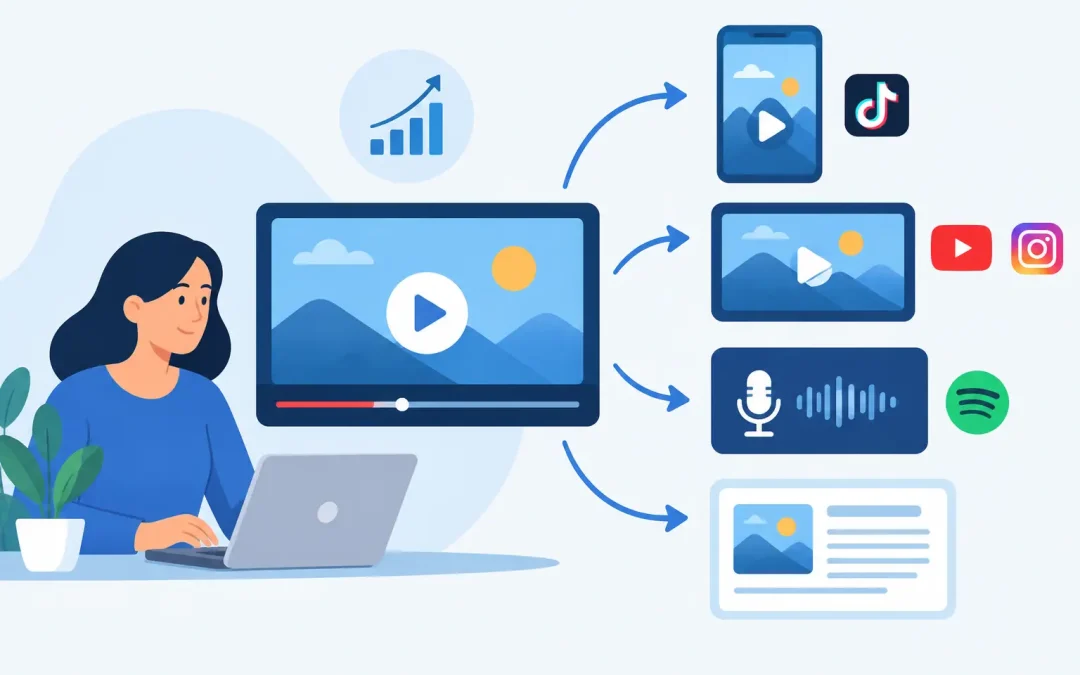
A customer testimonial, a service demonstration, or a 60-second brand video should not have a single job. For a local business working with a finite marketing budget, one well-planned production can support weeks or months of useful communication. The best ways to repurpose video content begin with treating every recording as a source of campaign assets, not a one-time social post.
That approach helps businesses maintain a more consistent presence without asking their team to create something entirely new for every platform. It also creates better alignment between your website, social media, paid advertising, email marketing, and sales conversations. The goal is not to put the same video everywhere. It is to adapt the strongest message for the way people use each channel.
Start With the Business Goal, Not the Video Format
Repurposing works best when the original video has a defined purpose. Before filming, decide what the audience should know, feel, or do after watching. A dealership may want to build confidence in its service department. A restaurant may want to promote a seasonal menu. A home services company may need to explain why an inspection matters before a repair becomes expensive.
That core goal determines which moments deserve to be reused. A long-form video can contain several messages, but each repurposed asset should focus on one clear takeaway. Trying to carry every point from the original production into a 20-second clip usually makes the message less effective.
Planning ahead also saves money. Capture a few alternate openings, vertical shots, customer reactions, behind-the-scenes footage, and clean photos during the same production session. These supporting assets give your marketing team more options without scheduling another shoot.
Best Ways to Repurpose Video Content Across Channels
The right mix depends on your audience, your sales cycle, and the channels already producing results. A business that receives most inquiries through search and its website may prioritize educational clips and landing-page video. A retailer with an active local following may get more value from short social content and paid promotions.
Turn Longer Videos Into Focused Social Clips
A two-minute video often contains several short, useful segments. Pull out a customer quote, a practical tip, an answer to a common question, or the most visually compelling part of a demonstration. Each clip should make sense to someone who has not seen the full video.
For most social placements, use captions. Many people watch without sound, especially when browsing on a phone. A clear opening line in the first few seconds matters as much as the editing. Instead of beginning with a logo animation, lead with the question or problem your customer recognizes: “What should you check before hurricane season?” or “Why is this repair taking longer than expected?”
Vertical edits are generally the right choice for mobile-first placements, while horizontal versions may still serve YouTube, your website, presentation screens, or connected TV campaigns. The underlying message can remain consistent, but the edit should fit the placement.
Build a Helpful Website Page Around the Video
Video can strengthen a service page, a product page, a location page, or a campaign landing page when it answers the questions a prospective customer has before contacting you. A short introduction from an owner or technician can make a local business feel more credible than stock photography alone.
Do not simply embed the video and move on. Add supporting copy that explains the service, the customer benefit, the process, and the next step. A written transcript or concise summary is useful for accessibility and gives search engines additional context. The page should still work for visitors who do not press play.
For businesses with a longer consideration cycle, create a library of short videos that address recurring questions. Examples include financing explanations, preparation checklists, maintenance guidance, or a walkthrough of what to expect during an appointment. These assets can reduce uncertainty before the first call.
Use Video Insights in Email Campaigns
Email is a practical home for video repurposing because it reaches people who have already shown interest in your business. Rather than trying to include a full video file, use a compelling image from the video and a brief message that explains why the recipient should watch.
A restaurant might send a short chef video to introduce a limited-time offering. A regional retailer can feature a product demonstration before a sale. A professional service firm can share a quick explanation of a timely issue that affects clients. The key is relevance. A video about a new service is more valuable when sent to customers who are likely to need it.
You can also turn the video’s main point into the email itself. If a two-minute interview includes three useful maintenance tips, present those tips in the email and offer the video as added detail. This gives subscribers value even if they do not click.
Convert Interviews and Testimonials Into Written Content
A strong customer interview can support far more than a video post. Pull the central story into a case study, use a concise quote in a print ad or direct mail piece, and develop a social graphic around the customer’s result. With permission, a testimonial can become one of the most credible assets in a campaign because it speaks in the customer’s own words.
Educational videos can become blog articles, FAQ entries, sales handouts, and scripts for future social posts. The written version should not be a word-for-word transcript. Organize it around the reader’s needs, clarify technical points, and use plain language. A video about roof replacement, for example, may become an article about warning signs, a checklist for homeowners, and a short email reminder before storm season.
This approach is particularly useful for owner-led businesses where subject-matter expertise exists but time is limited. One recorded conversation with an experienced team member can supply several pieces of practical content.
Create Paid Ads From the Strongest Moments
Organic social posts help maintain visibility, but paid media can extend the reach of the messages that prove their value. Review your videos for moments that quickly communicate a benefit, an offer, a differentiator, or a customer outcome. Those moments can become short video ads for social platforms, streaming placements, or retargeting campaigns.
Paid creative should be more direct than a general brand video. It needs a recognizable problem, a relevant audience, and a specific next step. A 15-second clip may be enough if the offer is simple. More involved purchases may require a sequence: an introductory video to build awareness, a testimonial to build trust, and a service-focused message for people who have visited your website.
Measure performance beyond views. Depending on the campaign, the meaningful results may be calls, form submissions, store visits, booked appointments, or qualified traffic to a key page. High view counts are encouraging, but they do not automatically indicate that advertising dollars are producing business value.
Keep the Brand Consistent While Changing the Format
Repurposing can create inconsistency when different versions drift away from the original message. Establish a few standards before content moves across channels: approved logo use, visual colors, preferred terminology, service claims, contact information, and the call to action. This is especially important for businesses with multiple locations, departments, or outside vendors involved in marketing.
Consistency does not mean every asset looks identical. A polished brand video, a technician’s quick explanation, and a customer testimonial can have different levels of production while still representing the same business well. What matters is that the message is accurate, recognizable, and appropriate for the audience.
Build a Repurposing Workflow Your Team Can Maintain
The most effective system is one your business can repeat. After a video is produced, identify its core message and select the most useful adaptations before publishing anything. Assign ownership for editing, copywriting, approvals, scheduling, and reporting so good footage does not sit unused in a folder.
A practical workflow may include a primary video, several short clips, a website update, an email feature, a written article or FAQ, and one or two paid-ad variations. Not every video needs every format. A quick event recap may only warrant social clips, while a customer success story may justify a larger campaign across several channels.
Keep a simple record of what was created, where it ran, and what happened next. Over time, patterns will emerge. You may find that how-to clips generate the most website visits, customer stories produce better lead quality, or short promotional videos drive the strongest response during seasonal campaigns. Those insights should guide the next production plan.
The best video strategy respects both creativity and stewardship. When each production is planned to serve multiple useful purposes, your business can stay visible, answer customer questions, and make more of every marketing dollar without adding unnecessary work to an already busy team.