
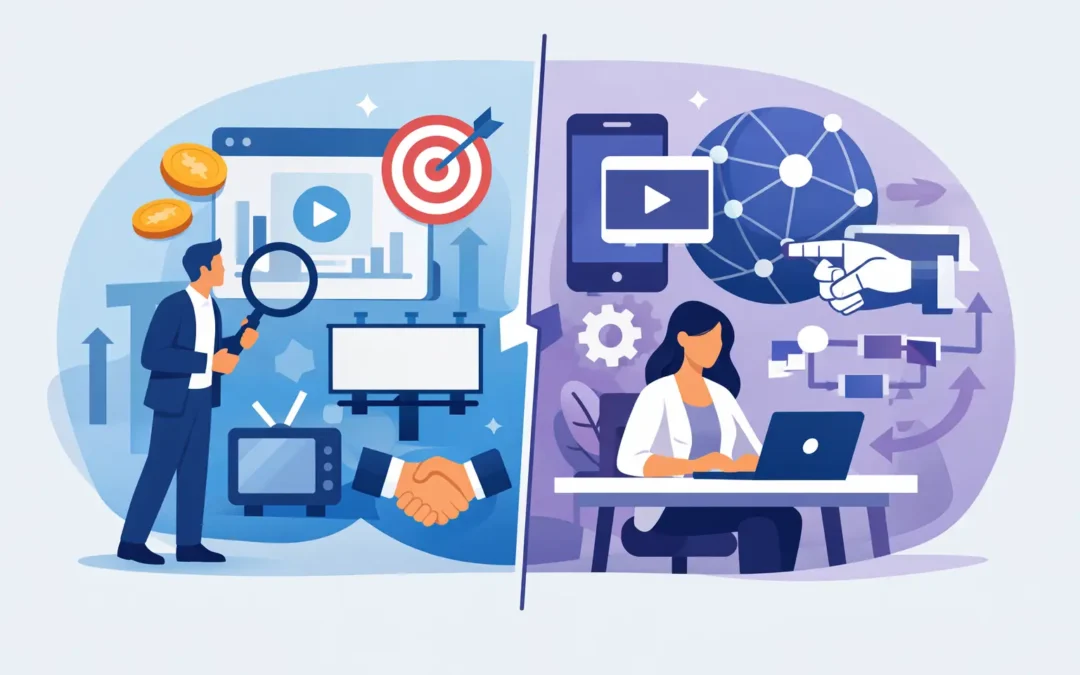
A restaurant owner may want more weekday reservations. A dealership may need qualified trade-in leads. A regional service company may be trying to stay visible across several counties. In each case, the question is not simply where to advertise. It is how to place the right message in front of the right people without wasting budget. That is where media buying vs programmatic advertising becomes a practical business decision, not just industry terminology.
Both approaches can support growth, but they do different jobs. Media buying is the broader discipline of securing advertising placements and managing the investment behind them. Programmatic advertising is a technology-driven method for buying certain digital impressions in real time. Understanding the difference helps business owners set better expectations for cost, control, reporting and results.
What Media Buying Actually Covers
Media buying is the process of planning, negotiating, purchasing and managing digital campaigns, traditional advertising space or airtime. It can include television, radio, streaming audio, print, out-of-home displays, and most effective, a direct-response digital campaigns, paid social, search, sponsorships and more.
A strong media buy begins before a placement is purchased. The buyer considers the business goal, audience, geography, seasonality, competitive activity, creative requirements and available budget. From there, they identify media opportunities that can realistically reach prospective customers and negotiate the terms.
For a local retailer, that may mean combining a targeted streaming television schedule with local radio, paid search and other very effective digital media platforms. For a home services company, it may mean prioritizing paid search when demand is highest, then using display or video to maintain awareness in surrounding communities.
The value of traditional media buying is not limited to access. It is the judgment behind the plan. An experienced buyer can evaluate whether a proposed audience is meaningful, whether rates are competitive, whether inventory fits the brand and whether a vendor is offering value or simply filling available space.
Where Programmatic Advertising Fits
Programmatic advertising uses software and automated bidding to purchase digital ad inventory. When a person loads a website, opens an app or watches certain streaming content, available ad space can be offered for sale in milliseconds. Advertisers can bid to show an ad to that user based on selected audience, location, device, behavior or contextual criteria.
Programmatic can deliver display banners, online video, connected TV, audio, digital out-of-home and other digital formats. It is often associated with precision because campaigns can be set up around geographic areas, audience segments, retargeting pools or interests that suggest a customer may be in the market.
That precision is useful, but it should not be overstated. Programmatic targeting is based on data signals, not perfect knowledge of an individual customer. Device data can be incomplete. Audience segments can be broad. Attribution can be influenced by tracking limitations, multiple touchpoints and the natural difficulty of connecting an ad impression to an offline sale.
For that reason, programmatic works best when it is managed with clear goals, careful targeting, quality controls and realistic measurement standards.
Media Buying vs Programmatic Advertising: The Core Difference
The simplest distinction is that media buying is the overall practice, while programmatic advertising is one way to buy digital media.
Media buying may involve direct negotiations with a local television station, a radio group, a billboard company, a publisher or a streaming provider. A buyer may secure added-value promotional spots, lock in a rate for a seasonal campaign, choose specific programming or arrange an exclusive local sponsorship.
Programmatic buying typically relies on automated marketplaces rather than one-to-one negotiation for each placement. The advertiser sets campaign rules, such as target geography, audience criteria, bid limits, frequency caps and preferred inventory. Technology then helps determine which impressions to purchase within those parameters.
Neither approach is automatically better. A local business may gain more from a direct media purchase when it needs premium placement, a trusted local environment or a sponsorship opportunity that cannot be purchased through an open marketplace. Programmatic may be more effective when the goal is flexible digital reach, audience-based targeting or efficient retargeting across many sites and apps.
Comparing Control, Reach and Cost
Direct media buying often gives advertisers more visibility into where an ad will appear and what is included in the agreement. If a business sponsors a local news segment, purchases a fixed billboard location or runs spots during selected programming, the placement is clearly defined. That control can matter for brands that want to be associated with a specific local audience or media property.
Programmatic offers control of a different kind. Instead of choosing every individual placement, the advertiser controls the target strategy and buying rules. This can make it easier to adjust budgets, creative, locations and audience segments during a campaign. It also allows campaigns to extend beyond a single publisher or platform.
Costs depend on the channel, market, audience, season, inventory quality, creative format and campaign objective. Programmatic pricing is often measured by cost per thousand impressions, but a lower rate does not necessarily mean better value. Low-cost inventory may have limited visibility, weak engagement or a poor fit for the audience.
A negotiated media buy can appear more expensive at first glance, yet provide meaningful value through premium placement, local relevance, added exposure or strong reach in a defined market. The right question is not, which option has the lowest price is which investment gives this campaign the best chance to produce a useful business result.
When Programmatic Is a Strong Choice
Programmatic is particularly effective when a business needs digital flexibility and measurable audience activity. A regional dealership, for example, may use programmatic video to reach in-market vehicle shoppers within a practical driving radius. Visitors who view inventory online can then be served follow-up messaging, provided frequency is managed carefully.
It can also help organizations reach audiences across multiple digital environments without having to purchase each website or app individually. This is useful for campaigns that need scale beyond one local publisher.
Still, programmatic requires active oversight. Campaigns need appropriate geographic boundaries, frequency limits to avoid overexposure, brand-safety settings, creative rotation and regular performance review. Sending impressions to a broad audience without these controls can spend money quickly while producing little meaningful response.
When Direct Media Buying May Deliver More Value
Direct buying is often a strong fit when local credibility, contextual relevance and placement certainly matter. A restaurant opening a new location may benefit from a recognizable local radio partnership or a high-impact out-of-home placement near the restaurant. A healthcare provider may value an established regional publication or a trusted broadcast environment that aligns with its reputation.
It can also be valuable when a media partner provides promotional support that goes beyond standard ad units. Event participation, custom content, email exposure, on-air mentions and social promotion may all be negotiated as part of a larger package. Those elements can be difficult to replicate through automated buying alone.
Experienced negotiation matters here. Media proposals should be reviewed not only for the stated rate, but also for audience quality, reach, placement, cancellation terms, production needs and the value of any added components.
Build the Plan Around the Customer Journey
The strongest campaigns rarely force a choice between only two options. A customer may hear a radio spot during a commute, see a streaming television ad at home, search for the business later and visit a website before making contact. Each channel can have a distinct role.
For many local businesses, a balanced plan works well. Direct media placements can establish presence and trust in the market. Programmatic campaigns can extend reach, support video or display retargeting and keep the brand visible to likely prospects. Search advertising can capture immediate demand, while a well-maintained website gives every campaign somewhere credible to send traffic.
Measurement should reflect that reality. Calls, form submissions, appointment requests, store traffic, quote volume, web engagement and sales trends are more useful than impressions alone. Impressions matter because they represent delivery, but they are not the end goal.
Put Accountability Before Automation
Technology can make ad buying faster, but it does not replace strategy, creative judgment, or budget stewardship. The right mix depends on your market, your customers, your sales cycle, and what a new lead or sale is worth to your business.
Before committing budget, define the outcome you need, the geography you can serve, and the actions that indicate real progress. Then choose media channels that support those goals and hold every part of the plan accountable. When media buying is guided by that discipline, programmatic becomes a useful tool in the mix rather than making a promise that technology alone will solve the marketing problem.
That broader approach is at the heart of Allen Media's One Agency. Every Platform. philosophy. Media buying and programmatic advertising should not exist in separate silos. They are tools within a larger marketing strategy that can also include search, social media, digital display, streaming, traditional media, creative development and the website experience that ultimately convert the customer.
For local businesses, having those pieces connected can make a meaningful difference. When the same team understands your brand, your audience, your market and your goals, media decisions can be made with the entire customer journey in mind rather than optimizing one channel in isolation. A direct media placement can build recognition. Programmatic can extend reach and reinforce the message. Search can capture intent. Your website can turn that interest into action.
That is what One Agency. Every Platform. means at Allen Media. It is not simply a statement about the number of services available. It is an approach to making every platform work together toward the same objective, with a consistent brand message and accountability for the investment behind it.
The best media strategy is rarely about choosing between media buying and programmatic advertising. It is about understanding what each can accomplish, determining where each fits, and building a connected plan that gives your advertising the best opportunity to produce meaningful business results.